










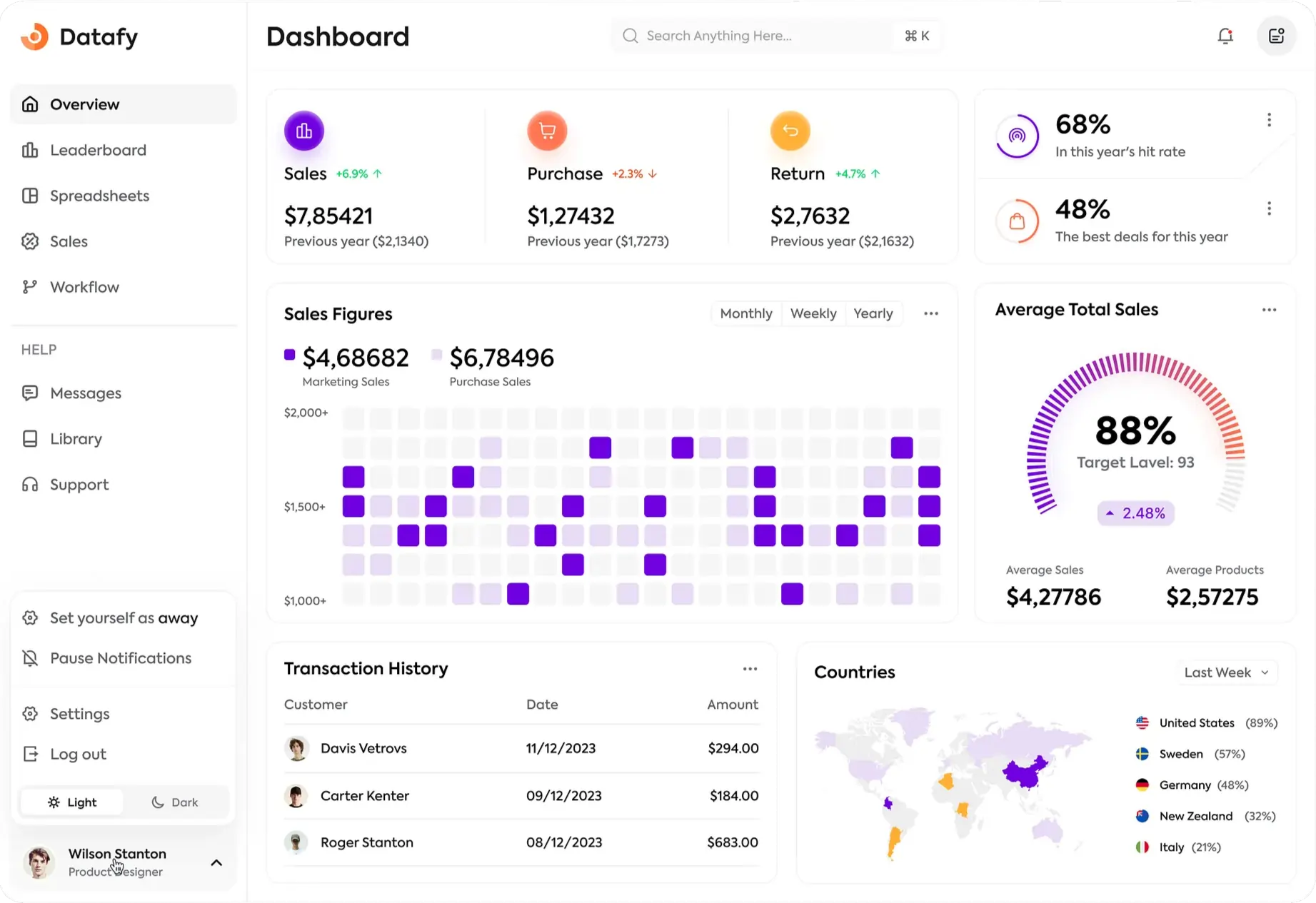
FMCG ERP and Distribution Management in Riyadh

FMCG ERP and Distribution Management in Riyadh for brand head offices that sell through distributors across the Kingdom. SalesMake shows primary orders, depot stock, scheme spend, open claims and distributor balances on one screen.

Why brand teams want FMCG ERP and Distribution Management in Riyadh
200+ Projects Delivered

What you get

  • Primary orders from every region on one screen
  • Scheme cost set against the extra volume it drove
  • Distributor balances checked before each order

Why brand teams want FMCG ERP and Distribution Management in Riyadh

A lot of FMCG brands selling across Saudi Arabia keep their commercial and finance teams in Riyadh, in towers around Al Olaya or King Abdullah Financial District. Their distributors, though, sit in Qassim, Al Kharj and the other regions, and each one reports in a different format. When the trade marketing manager asks whether last quarter's scheme paid for itself, the answer usually takes a week of spreadsheet work. SalesMake brings distributor orders, depot balances and scheme costs into one ledger so that question has a same-day answer. Symake configures it from Bengaluru and sends consultants to Riyadh for workshops, training and go-live.

Book a Free Demo
0 + Projects Delivered
0 % Client Satisfaction
0 + Years of Experience
0 + Industries Served

What head office controls from Riyadh

Nine views a brand's commercial team checks each week

Primary order book

Primary order book

See every order your distributors placed, by region and pack size, and compare it with the monthly plan agreed with each one.

Depot stock levels

Depot stock levels

Track quantities held at each distributor depot so you can spot overstock before it ages and shortages before shelves go empty.

Scheme payback

Scheme payback

Compare what a trade scheme cost with the extra cases sold while it ran, so the next budget rests on results rather than habit.

Claim approvals

Claim approvals

Distributor claims for schemes and price support arrive with the invoices behind them, ready for a quick yes or no.

Credit exposure

Credit exposure

Each distributor has a limit and a live balance, and orders that would break the limit wait for a manager to release them.

Collections tracking

Collections tracking

See what each distributor has paid, what is overdue and which payments still need matching to invoices.

Brand-level margin

Brand-level margin

Read revenue, discounts and scheme costs by brand and category, from beverages to home care, without building pivot tables.

Double-entry books

Double-entry books

Every primary invoice, credit note and claim posts to a full general ledger, so finance closes the month from the same data.

Pricing rules

Pricing rules

Set distributor price lists and discount rules once, then let the system apply them to every order automatically.

Did that scheme earn its money back
Did that scheme earn its money back screenshot

Did that scheme earn its money back

Trade schemes are one of the largest costs an FMCG brand carries, yet most teams only see the spend. SalesMake calculates each scheme at order time, records what was given, and links it to the volume sold in the same period. Riyadh teams can then compare a buy-ten-get-one offer in Qassim with a price-off in Al Kharj and keep the one that worked.

  • Scheme benefit calculated on every order
  • Spend and volume compared by region
  • Claims matched to the original scheme
  • Results ready for the next budget round
See scheme reports →

Rolling out distribution control from Riyadh

Six stages from the first workshop to monthly reviews

Map distributors

We list every distributor, depot and credit term, and agree which reports head office needs first.

Set price rules

Price lists, discount tiers and scheme rules are captured and checked with your trade marketing team.

Load balances

Opening stock per depot and open distributor balances are loaded and reconciled with your books.

Pilot region

One region goes live first so issues surface with a small group before the national rollout.

Train teams

Consultants come to Riyadh to train sales administration, finance and regional managers in English.

Review monthly

After go-live we review scheme and claim reports with you each month until the numbers settle.

Distribution control for FMCG brands in Riyadh

Brands invoicing distributors from Riyadh charge VAT at 15% under ZATCA rules, and FATOORA phase 2 now reaches far more sellers. Wave 25 applies where VAT-subject revenue went above SAR 187,500 in any year from 2022 to 2025, and those businesses must integrate by 1 February 2027. Each primary invoice to a distributor is a B2B invoice that ZATCA clears in real time, as UBL XML with a cryptographic stamp and QR code. SalesMake prepares invoices and credit notes in that format, carrying the Arabic fields ZATCA requires. Excise tax on goods such as sweetened and energy drinks is recorded separately where it applies.

15% VAT on each distributor invoice and credit note
B2B invoices sent for real-time ZATCA clearance
Ready for the 1 February 2027 wave 25 deadline
Excise recorded apart from VAT on affected drinks

What a Riyadh head office gets from Symake

Symake, a Bengaluru implementation firm, has 200+ projects delivered. It has no office in Saudi Arabia. Consultants fly to Riyadh for the moments that need a room together, and support runs remotely in hours that overlap your working week.

✓ Workshops held in Riyadh
✓ Distributor claims settled in the system
✓ Live dashboards by region and brand
✓ Training delivered in English
✓ Custom pricing and scheme rules
✓ Phased rollout, one region at a time
Plan a Riyadh rollout
What a Riyadh head office gets from Symake
Built for FMCG

See your Riyadh distributor network on one screen

Share a month of distributor orders and we will show you the scheme and credit reports SalesMake builds from them.

Frequently Asked Questions

Can our Riyadh office see orders from distributors in Qassim and Al Kharj?

Yes. Every distributor works in the same system, so head office sees each primary order as it is placed, with region, pack size and price. There is no need to wait for a weekly spreadsheet from each territory.

How does SalesMake decide whether a scheme paid back?

It records the benefit given on every order while the scheme runs, then sets that cost against the volume sold in the same period and region. You can compare it with a similar period without the scheme to judge the extra volume.

What happens when a distributor goes over its credit limit?

The order is held and a named manager is alerted. The manager can release it, ask for a payment first or reduce the quantity. Every release is logged with the user and the reason.

Will our primary invoices meet ZATCA phase 2 rules?

SalesMake produces B2B invoices as UBL XML with a cryptographic stamp and QR code, sends them for real-time clearance and keeps the Arabic fields ZATCA requires. We set this up ahead of your wave deadline.

Do your consultants come to Riyadh?

Yes. Consultants fly in from Bengaluru for the discovery workshops, user training and go-live. Between those visits the work runs remotely, with support hours that overlap the Saudi working week.

Can we keep separate books for two brands or two companies?

Yes. Each company can have its own ledger, VAT number and price lists, while head office still sees combined dashboards across the group.

Do we need to replace our accounting system?

Not always. SalesMake includes full double-entry accounting, so many brands move their books into it. If you prefer to keep another ledger, we agree the postings to export during scoping.

Is the software available in Arabic?

Screens are configured in English, and our training and support also run in English. Tax invoices and credit notes carry the Arabic fields ZATCA requires.

Call us WhatsApp