Every founder reaches a critical inflection point where hard work is no longer enough to grow the company. You hire more people, spend more on marketing, and push your sales team harder. Yet, deals still slip through the cracks, and revenue plateaus.
The culprit isn't your product or your team. The missing piece is business system integration.
Without a connected digital architecture, mid-size businesses suffer massive inefficiencies. In fact, running a company without a centralized system can lead to an average annual revenue loss of ₹73 lakhs for mid-size firms. When your marketing platform doesn't talk to your CRM, and your CRM doesn't communicate with your billing software, your team spends their days doing manual data entry instead of closing deals.
This comprehensive guide will show you exactly how transitioning from manual processes to a fully integrated digital ecosystem can eliminate these bottlenecks. We will explore how smart systems can recover lost leads, drive pipeline automation, and ultimately transform your bottom line.
Key Takeaway: Disconnected systems create invisible revenue leaks. Integrating your tech stack is a mandatory step for scaling operations.
The Hidden Cost of Disconnected Systems
To understand the impact of disconnected tools, let’s look at a real business situation. Imagine two different companies operating in the exact same B2B service industry.
Business One: The Manual Maze
Business One relies on an assortment of unlinked tools. Their leads live in downloaded spreadsheets, and customer support tickets are buried in a shared email inbox.
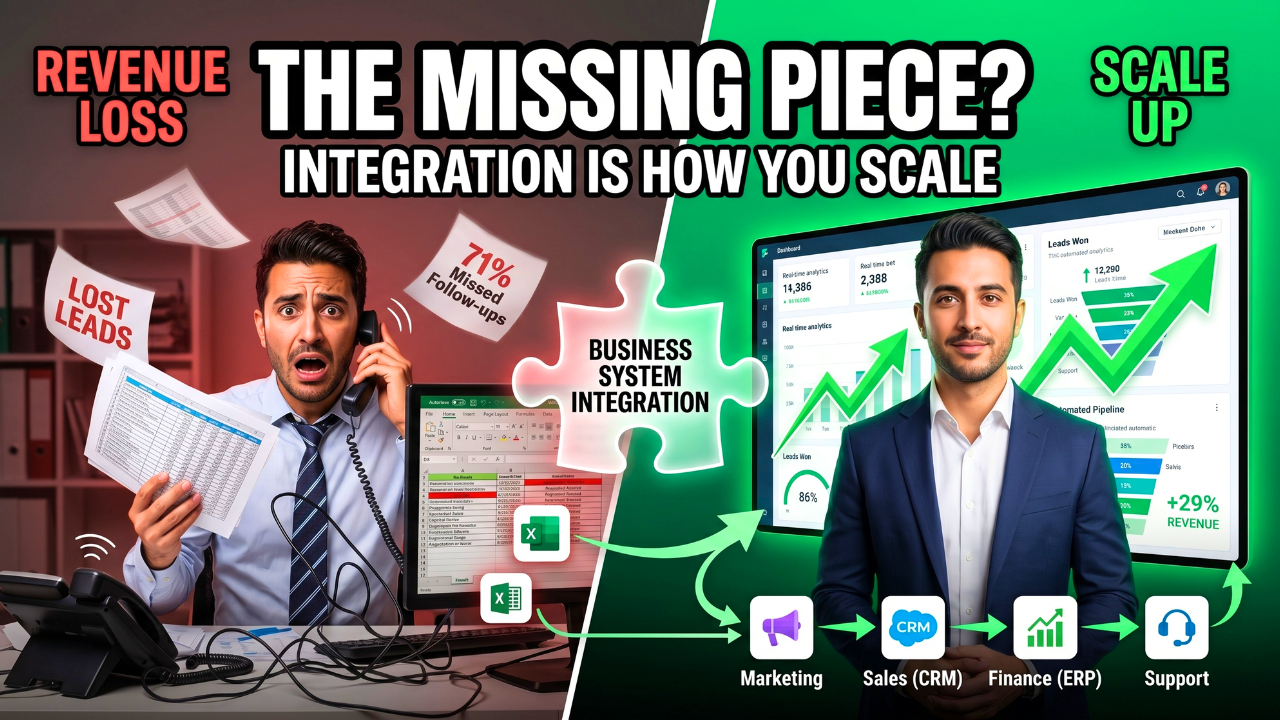
Because their tools are isolated, 71% of their leads never get a second follow-up. Their sales forecasting is little more than a gut feeling. When their best sales rep left last month, the entire pipeline vanished with him because nothing was logged in a central system.
Business Two: The Integrated Machine
Business Two has prioritized business system integration. Their website forms flow directly into their CRM, triggering immediate alerts.
Every lead is tracked, and every follow-up is driven by pipeline automation. Because the system prompts them, they call new leads back in under five minutes. As a result, their sales revenue is up 29%, and their team spends 34% less time on administrative tasks. Their forecasting is built on real-time data, not human memory.
Comparison: Business One is failing not because their service is inferior, but because Business Two is faster, more organized, and actively following up on leads that Business One doesn't even realize they lost.

Key Takeaway: Your competitors are using integrated systems to steal your neglected leads. Speed and organization directly correlate to higher revenue.
What Exactly is Business System Integration?
At its core, business system integration is the process of connecting different software applications and IT systems so they function as a single, coordinated unit. For B2B service companies and founders, this usually centers around the CRM.
Rather than having isolated islands of data, an integrated system ensures information flows seamlessly from marketing to sales, and then to operations and finance. This is the foundation of digital business transformation.
If you are currently evaluating your existing software setup or are unsure which platform to prioritize first, read our foundational guide on how to choose the right CRM or ERP for your business before mapping out your integration framework.
CRM vs ERP Alignment
Many founders confuse or separate their CRM (Customer Relationship Management) and ERP (Enterprise Resource Planning) systems. A CRM handles the front-end, sales, marketing, and lead management. The ERP handles the back-end, inventory, finance, and HR.
When you integrate these two powerhouses, magic happens. A closed-won deal in the CRM automatically generates an invoice in the ERP and triggers the service delivery team. There are no duplicate data entries and zero delays.
Key Takeaway: True integration eliminates data silos, allowing your CRM and ERP to communicate instantly and flawlessly.
Core Areas Where Integration Drives Immediate ROI
If you are evaluating CRM software integration, you need to focus on the areas that impact your cash flow the fastest.
1. Automated Lead Management
Leads are expensive to acquire. Letting them grow cold is burning money. With an integrated system, you establish an automated lead management protocol.
When a prospect downloads a whitepaper, the system automatically scores the lead based on their industry and company size. It then routes the lead to the correct sales rep and sets a mandatory follow-up task. If the rep doesn't call within an hour, the system escalates the notification to a manager.

2. Pipeline Automation
Manual pipeline updates are the bane of every sales team. Pipeline automation removes the friction.
When a rep sends a proposal via your integrated e-signature tool, the CRM automatically moves the deal stage from "Meeting Completed" to "Proposal Sent." When the client opens the document, the rep gets a real-time notification to call them. This level of visibility shortens the sales cycle dramatically.
3. Customer Success and Retention
Winning a client is only half the battle. Retaining them requires flawless execution.
Consider the case of Featherlite Developers, a major player dealing with complex real estate transactions. By automating their leasing and sales processes through custom CRM integration, they eliminated manual document tracking. Client information flowed directly from the initial inquiry through to the final lease agreement. This seamless transition from sales to service delivery ensures the client feels valued and understood, drastically reducing churn.
Key Takeaway: Focus your integration efforts on lead routing, pipeline automation, and transitioning closed deals smoothly into service delivery.
Step-by-Step: How to Integrate Your Business Systems
Transitioning your business from manual processes to digital systems can feel overwhelming. However, following a structured approach minimizes disruption.
Step 1: Audit Your Current Tech Stack
List every single piece of software your team uses. Identify where data is being manually copied from one platform to another. These are your integration priorities.
Step 2: Define the "Source of Truth"
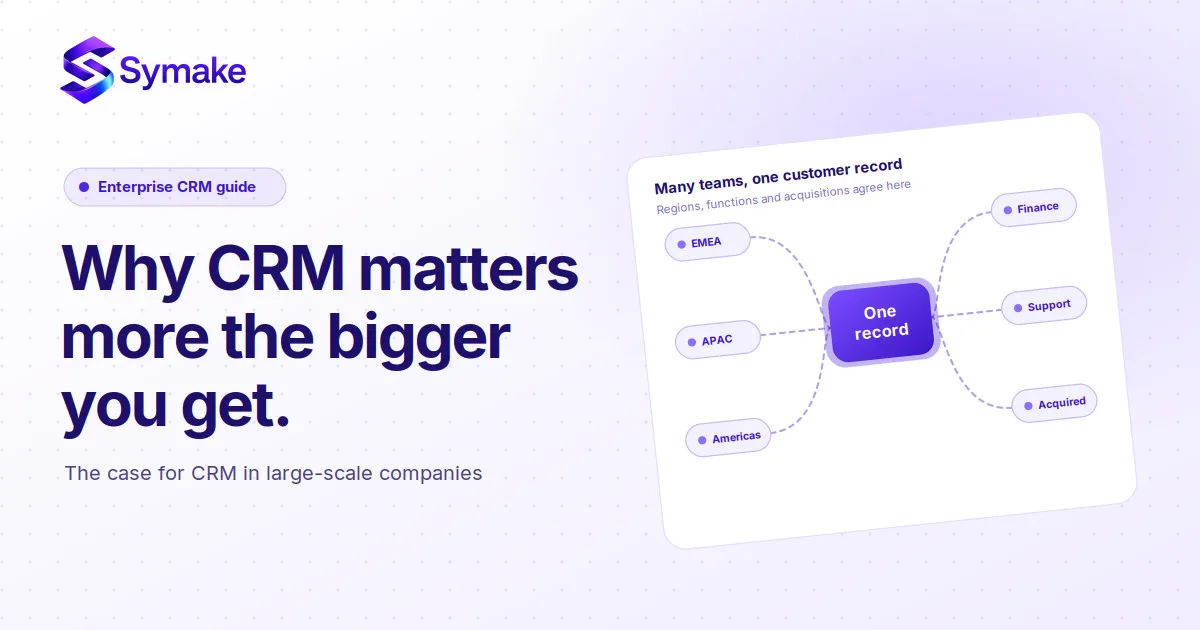
You must designate one central system as the master record for customer data. For most B2B companies, this is the CRM. All other systems should push data into the CRM or pull data from it.
Step 3: Map the Ideal Workflows
Before touching any technology, map out how you want the business to run.
What happens when a lead comes in?
What happens when a deal is closed?
How does the billing department get notified?
Draw these workflows out on a whiteboard.
Step 4: Choose the Right Integration Method
You have three main options for integration:
Native Integrations: Built-in connections provided by the software vendors. These are the easiest and most stable.
Middleware (e.g., Zapier, MuleSoft): Third-party tools that act as a bridge between applications that don't natively connect.
Custom API Development: Building a bespoke connection. This is necessary for highly specific, complex, or legacy systems.
Step 5: Start Small and Scale
Do not try to integrate your entire business over a single weekend. Start with the most critical revenue-generating workflow, usually lead management. Once that is stable, move on to operations and billing.
Key Takeaway: Successful integration requires a clear strategy, a defined "source of truth," and phased implementation.
Overcoming the Fear of Digital Transition
Many founders hesitate to embrace business system integration because they fear the transition period. They worry about data loss, team resistance, and the upfront costs.
It is crucial to reframe this mindset. The cost of doing nothing is far higher. Remember the 71% of leads lost to missed follow-ups? That is the tax you pay every single day for relying on manual processes.
To ensure high user adoption, involve your team early. Show them how pipeline automation will reduce their admin work by 34%, giving them more time to sell and earn commissions. Provide comprehensive training, and celebrate the small wins during the rollout phase.
Key Takeaway: Team buy-in is just as important as the technology itself. Show your employees how integration makes their jobs easier and more lucrative.
Conclusion: Stop Guessing and Start Scaling
Running a modern B2B service company without business system integration is like trying to drive a car with a disconnected dashboard. You might be moving forward, but you have no idea how fast you are going, how much fuel you have left, or if the engine is about to overheat.
By prioritizing CRM software integration, automating your lead management, and aligning your digital tools, you build a scalable architecture. You stop relying on gut feelings and start making decisions based on real, actionable data.
Ready to stop losing leads to faster competitors? Explore our specialized Symake System Integration and CRM/ERP Consulting Services. Our technical experts design, implement, and deploy custom architecture that bridges your data silos, automates your pipeline, and unlocks sustainable business growth. Let us show you exactly what your business can look like on a fully optimized system.
Frequently Asked Questions (FAQs)
1. What is the biggest benefit of business system integration for a B2B company?
The single biggest benefit is the elimination of data silos, which directly leads to improved automated lead management. When your systems communicate, you can guarantee a rapid response time to new inquiries, preventing valuable prospects from slipping through the cracks and increasing your overall win rate.
2. How does pipeline automation actually save my sales team time?
Pipeline automation handles repetitive administrative tasks. Instead of a sales rep manually logging calls, drafting follow-up emails from scratch, or updating deal stages in a spreadsheet, the integrated CRM does this automatically. This typically reduces admin time by over 30%, freeing reps to focus on relationship-building and closing.
3. Should I integrate my CRM and ERP, or keep them separate?
You should absolutely integrate them. While they serve different primary functions, CRM vs ERP alignment is crucial for a smooth customer journey. Integrating them ensures that when sales closes a deal in the CRM, the ERP instantly recognizes it to trigger invoicing, inventory allocation, or service delivery scheduling without manual data entry.
4. Is transitioning from manual processes to digital systems disruptive to daily operations?
It can be if done poorly, but a strategic rollout minimizes disruption. The best approach is phased implementation. Start by integrating your most critical front-end process, like capturing website leads into your CRM. Once your team adapts to that, you can begin integrating back-office functions.
5. We are a mid-size firm; do we really need complex CRM software integration?
Yes. Mid-size firms actually suffer the most from a lack of systems. You are too big to manage everything via spreadsheets, but perhaps not large enough to afford massive inefficiencies. Proper business system integration is exactly what allows mid-size companies to punch above their weight, scale operations predictably, and compete with much larger enterprises.